





















































Ask most owners how many calls their business missed last month and you will get a shrug. Not because they do not care — because nobody is counting. Missed calls do not appear on a P&L. There is no line item called "customer who called twice, got voicemail, and bought from someone else." The loss is real, but it is invisible.
That is the core problem a unified number solves. Not "better phones." Visibility, and the revenue that comes with it.
What a unified number actually is
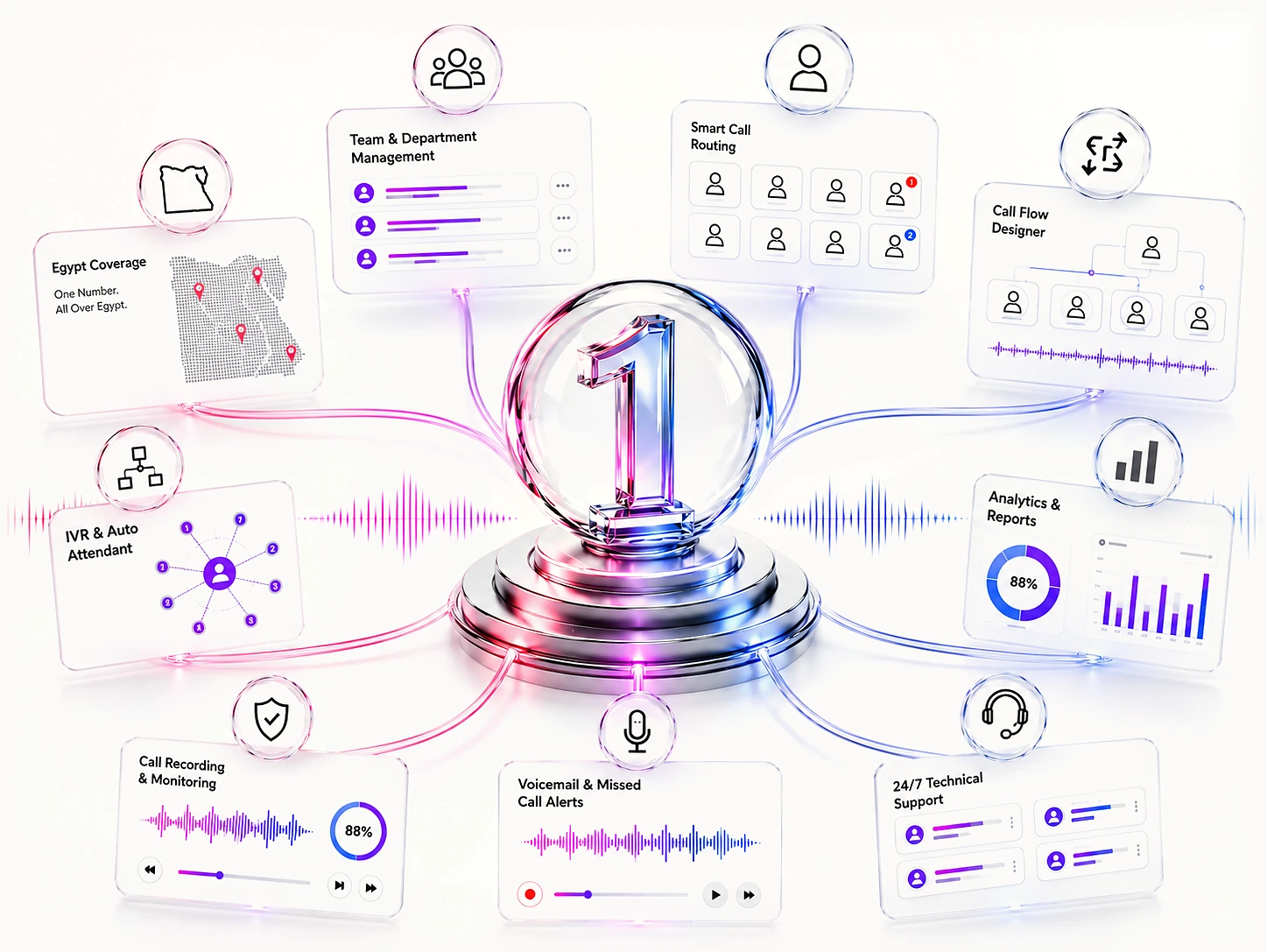
A unified number is one published line for your entire business — every branch, department, and agent behind it. Customers learn one number. Internally, that single line intelligently routes each call to whoever should answer: sales, support, the Alexandria branch, or a mobile phone when someone is away from their desk.
The customer sees simplicity. You get one system that sees every call.
The math owners never run
Take a business handling 200 inbound calls a day. Industry-wide, somewhere between 15–30% go unanswered at peak times — nobody free, wrong branch, after hours. Call it a conservative 20%: that is 40 calls a day.
Now assume only one in ten of those was a real buying customer, and your average sale is 500 EGP. That is 4 lost sales a day × 500 EGP × ~26 working days.
Adjust the numbers to your own business. The conclusion rarely changes: the phone system is almost never the expensive part. The missed calls are.
Where the money actually leaks
1. Calls that ring the wrong place
A customer calls the number on your Instagram page, but that line belongs to your first branch, opened years ago. They actually want the new location. The person who answers cannot help and takes a message that goes nowhere. The customer does not call back — they call a competitor.
2. Peak-hour overflow
Every business has a rush. With separate lines, one branch drowns while another sits idle. A unified number distributes overflow automatically — the call finds whoever is actually free, wherever they are.
3. The after-hours void
Customers call when it suits them, not when you are open. Without routing rules and missed-call logging, every evening call is simply lost. With them, it is captured, logged, and called back first thing — often still winnable.
4. No record, no accountability
When calls live on personal mobiles, you cannot see volume, response times, or who is actually performing. You are managing your busiest sales channel blind.
Why hardware is not the answer
The traditional fix was a PBX in a cupboard: upfront hardware, an installer, a maintenance contract, and a technician visit every time you add a person or open a branch. It ties your communications to a physical location — which is precisely the wrong shape for a business that wants to grow.
Cloud-based unified numbers invert this. No hardware to buy, no room to wire. Adding a branch is a configuration change, not a project. You can be live in days rather than months, and the cost is predictable monthly spend instead of capital expenditure.
What changes in the first month
- You finally see the number. How many calls came in, how many were answered, how fast. Usually the first surprise.
- Missed calls stop disappearing. Each one is logged and flagged, so someone can call back while the customer still cares.
- Marketing gets honest. One number across every campaign means you can finally tie call volume to the ads you paid for.
- Disputes end. Recorded calls settle "that is not what we agreed" in seconds.
The honest caveats
A unified number is not magic. It will not fix understaffing — if nobody is free, routing intelligently just means the call rings intelligently before it goes unanswered. It also needs an owner: someone who actually looks at the missed-call reports and does something about them. The technology surfaces the problem; your team still has to answer.
And migrating your published number takes coordination — signage, listings, campaigns. Worth doing carefully, once.
The bottom line
For most businesses, the question is not whether a unified number is worth it. It is how much has already been lost while the phone rang somewhere nobody was listening.
Run the arithmetic on your own call volume. If the leak is bigger than the subscription — and it almost always is — the decision makes itself.
See what one intelligent line does for your numbers
Free reception minutes included. 24/7 technical support. No hardware.
Book a Call →